
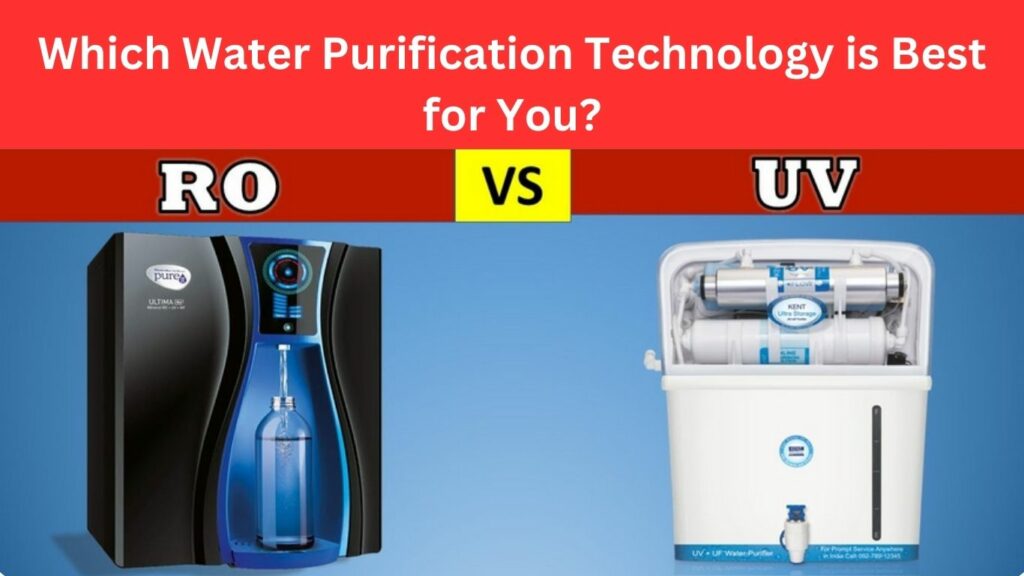
Water that is both clean and safe is crucial for our overall welfare. Choosing the appropriate water purification technology for your needs can be perplexing given the abundance of options in the market. In this article, we will analyze two widely-accepted water purification methods – Reverse Osmosis (RO) and Ultraviolet (UV) – with the aim of guiding you in selecting the optimal one for you.
1. Understanding Reverse Osmosis (RO) Purification: Let’s dive into the universe of RO purification. We’ll explore how reverse osmosis works and its power to eliminate impurities, toxins, and other hazardous substances from water. We also discuss the benefits of RO, such as its effectiveness in removing dissolved solids and improving the taste of water. We also shed light on the limitations and maintenance requirements of RO systems.
2. Unveiling Ultraviolet (UV) Purification: Next, we turn our attention to UV purification and its unique mechanism for water treatment. We explain how UV light destroys harmful microorganisms, viruses, and bacteria present in water. We discuss the advantages of UV, including its chemical-free operation and low maintenance requirements. Additionally, we address the limitations and considerations when using UV purification.
3. Comparing RO and UV Technologies: In this section, we draw a side-by-side comparison between RO and UV purification technologies. We analyze factors such as water quality improvement, effectiveness against different contaminants, energy consumption, and overall cost. By examining these aspects, we give an objective assessment of the strengths & weaknesses of both technologies.
4. Factors to Consider while Buying: Selecting the right water purification technology involves considering various factors. We discuss important considerations such as water source, specific contaminants, budget, water usage & installation requirements. By understanding these vital factors, readers can make an informed decision based on their unique needs and circumstances.
5. Case Studies and Testimonials: To provide real-world insights, we share a few case studies and testimonials from individuals who have chosen either RO or UV purification systems. These personal experiences highlight the benefits and challenges faced by users of both technologies, offering a practical perspective to readers.
6. Conclusion: In the final section, we summarize the key points discussed in the blog and provide a comprehensive conclusion. We emphasize the importance of assessing individual requirements, water quality, and specific contaminant concerns when making the decision between RO and UV. Ultimately, we aim to empower readers to make an educated choice that aligns with their preferences and ensures access to clean and safe drinking water.
Remember, making the right decision about water purification technology is crucial for your health and well-being. By understanding the differences between RO and UV, you can select the best-suited option for your specific water purification needs.